The Band
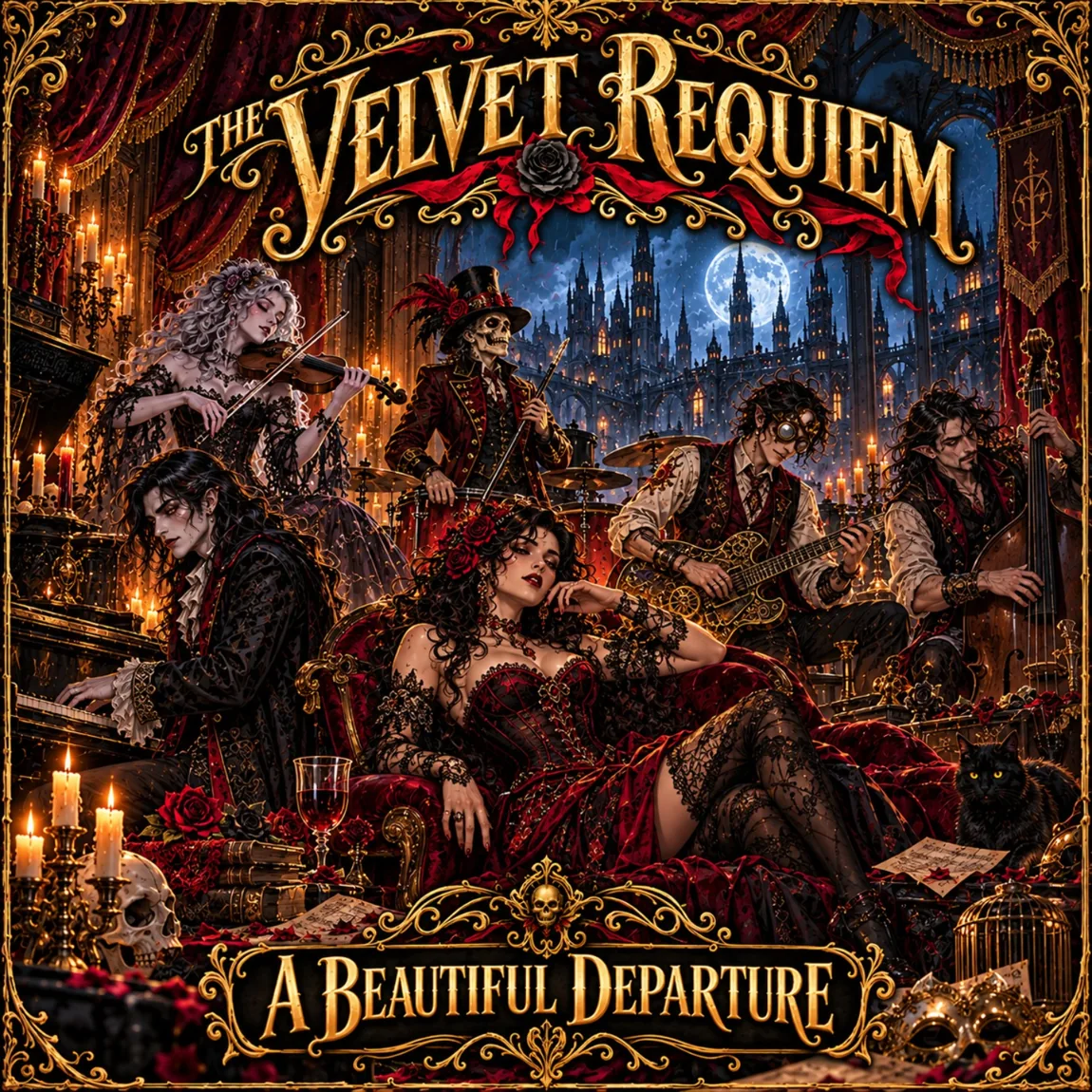
The Velvet Requiem is what happens when six very different musicians answer the same invitation to a theatre that should have been empty. Led by vampire chanteuse Vivienne Vex, the group mixes operatic grandeur with industrial thunder, mournful violin, sly cabaret rhythms, and the sort of humor one develops after surviving several funerals—sometimes one’s own.
They perform in Grimmstone, a rain-drenched city where the clocks disagree and the night has a habit of keeping what daylight forgets. Their songs wander from the decadence of Black Briar to the factories of Ironworks, from the grief of Mourning Square to the riotous bars of the Sixth Circle. Onstage, the Requiem can make a funeral feel like a celebration and a celebration feel like a confession.
Their debut, A Beautiful Departure, follows an unnamed visitor who arrives for a funeral and discovers that the guest of honor may be the life they are ready to leave behind. The band offers no guarantee of salvation, only a place at the table—and perhaps one last dance.
The Theatre That Called Them
A house full of empty seats
The Mourning Rose Theatre had been closed for years—or possibly for only a few days, depending on whom you ask. Its last proprietor vanished during a production of The Widow’s Last Encore. Some witnesses remembered a standing ovation; others remembered a roomful of patrons who never stood at all. After the doors were sealed, nearby residents still heard rehearsals behind the walls.
Then six black envelopes arrived, one for each future member of the band. Every invitation bore the same message: “The house is full. The orchestra is missing. Come dressed for the funeral.” The musicians arrived separately. They found a stage prepared for a concert and an auditorium that appeared entirely vacant.
When Vivienne stepped into the light, the chandelier ignited without a hand upon its switch. Professor Hollow sat at the piano. Ophelia raised her bow. Mordecai tested a note that seemed to answer itself. Felix found a bass line in the silence, and Rattle Jack counted the ensemble in. The empty seats applauded.
By the end of the performance, the Velvet Requiem existed. Nobody agrees on who first suggested the name. Nobody can produce a reliable date. Grimmstone’s newspapers have printed reviews of the concert in editions separated by decades.
The Mourning Rose today
Their home is a faded Velvet Quarter opera house of blackened stone, rain-streaked gilding, red velvet boxes, a rose-shaped stained-glass window, and backstage corridors that are longer on some nights than others. A living stage crew handles the ordinary work of performances. The less ordinary audience appears when it pleases.
The house has its customs. Never count the patrons aloud. Never promise that a show will finish on time. And if you hear applause from the locked upper gallery, take the compliment and resist the urge to investigate.
The music of a divided city
Each member brings a district into the ensemble. The Ironworks gives them steel and rhythm; Mourning Square, memory; Black Briar, a talent for expensive hypocrisy; the Sixth Circle, defiant laughter; Gaslight, the stubborn persistence of old songs; and the Velvet Quarter, theatrical spectacle. Together they sound unmistakably like Grimmstone: beautiful, contradictory, and a little dangerous to remember.
Meet the Musicians
THE CRIMSON NIGHTINGALE
Vivienne Vex
Vampire • Lead vocals • Velvet Quarter
Vivienne was already a legend in Velvet Quarter salons before the Requiem. Her voice could make an entire room lean forward, and her sense for hidden bargains made powerful patrons wary of her smile. She learned that the most elegant cages are built from favors, contracts, and applause. A wealthy admirer once tried to claim ownership of her voice; she has spent the years since making certain that nobody owns her music.
Commanding, witty, meticulously dressed in black and crimson, and fiercely protective of her musicians. She changes the black rose pinned over her heart after every concert. Her private book of names contains people she refuses to sing about.
The unanswered question. Vivienne suspects the original invitations may have been written in her own handwriting. She has never explained why.
THE DEVIL’S MACHINIST
Mordecai Brass
Demon-Blooded • Electric guitar • Ironworks
Before becoming a guitarist, Mordecai built machines in the Ironworks. He understands heat, pressure, failing bolts, and the difference between something that is broken and something that has been deliberately sacrificed. His departure from factory life followed an argument over materials that should never have been used in an instrument.
His black-and-brass guitar, The Widowmaker, contains experimental alloy and sometimes produces a second note no one plays. Gruff and practical, Mordecai distrusts grand speeches, although his solos tend to be grand speeches in another language.
The unanswered question. Factory workers have recognized voices inside the Widowmaker’s sustain. Mordecai says the instrument only remembers vibrations.
THE WEEPING VIOLIN
Ophelia Graves
Banshee • Violin and soprano harmonies • Mourning Square
Ophelia once played memorial services for families who could afford neither a full procession nor a choir. She collected the requested melodies in a handwritten ledger and learned that grief rarely looks the way an audience expects it to. At the Mourning Rose, she recognized the opening tune as a lament for someone who had not yet died.
Quiet, observant, compassionate, and unexpectedly sharp when provoked. Her silver-threaded violin is as capable of hope as sorrow. Her friendship with Rattle Jack is the band’s least likely and perhaps most necessary partnership.
The unanswered question. Her ledger contains at least one melody dated for a funeral that has not happened.
THE UNDERTAKER’S RHYTHM
Rattle Jack
Revenant • Drums and percussion • Sixth Circle
Rattle Jack has seventeen stories about how he died. The stories contradict one another, usually at the funniest possible moment. What he does remember is waking with a second chance and a considerable number of unpaid debts. He found his footing in Sixth Circle taverns, where an undead drummer is only unusual if he arrives sober.
He wears a battered top hat, loves an unruly audience, and refers to the skull above his drum kit as his manager. His jokes conceal a deep fear of being left behind. More than any other member, Jack treats the band as family.
The unanswered question. One of his drum patterns may be a coded memory of the night he died.
THE GENTLEMAN OF BAD DECISIONS
Felix Blackthorn
Fae-Touched • Bass • Black Briar
Felix grew up around the fortunes of Black Briar, where a favor is rarely free and good manners can disguise a knife. He became an accomplished musician partly to scandalize his social circle and partly because bass lines were the one form of truth he could deliver without a toast. His knowledge of elite parties makes him an excellent source of rumors.
Impeccably dressed in emerald, charming, cynical, and much more loyal than he wishes to appear. His silver pocket watch is always thirteen minutes ahead of the nearest clock. He insists this is an advantage, not a problem.
The unanswered question. His family would pay handsomely to recover certain letters, but Felix keeps them close to the watch.
THE MAESTRO WHO REFUSED TO LEAVE
Professor Hollow
Ghost • Piano, pipe organ, arrangements • Gaslight District
Professor Hollow died in the middle of a performance. Whether that performance was a triumph, a disaster, or something in between depends upon the witness—and sometimes upon the hour. Death did not improve his willingness to leave a composition unfinished. He remained attached to his piano and to a musical phrase he could never quite resolve.
An old-world perfectionist with a dry wit, Hollow provides the architectural bones of the Requiem’s sound. He can fill a cathedral with one chord, and he dislikes being interrupted by a drummer who thinks the correct tempo is “faster.”
The unanswered question. An unfinished score in his own hand may predate his death—or may not yet have been written.
The Sound of the Requiem
Their music is called Victorian Gothic Bombast. It is built on cathedral-scale piano and pipe organ, a banshee’s aching violin, guitar with the grit of an industrial foundry, bass lines that move like a crooked waltz, and drums that treat a funeral procession as a challenge to dance. Brass and orchestral arrangements lend the spectacle its grandeur; the members’ personalities give it teeth.
Vivienne’s contralto moves between velvet intimacy and operatic command. Ophelia answers in spectral soprano. Mordecai sometimes lends a weathered baritone. Professor Hollow contributes spoken passages as though every concert were also a lecture on etiquette. Rattle Jack supplies the interruptions that prevent it from becoming one.
Onstage, every song is a little play. The lighting changes with the district; scenery moves when nobody is watching; the audience occasionally hears instruments before the musicians touch them. Some concerts end in thunderous applause. Others end in a silence so complete that nobody wants to be the first to break it.
Friends, rivals, and rumors
The band is adored by working people who hear their lives in the lyrics, watched uneasily by socialites who recognize their secrets, and regarded with professional suspicion by anyone whose livelihood depends on the city keeping quiet. Silas Grey of Grimmstone Radio 103.3 GM has broadcast recordings that, according to the concert bills, were not yet performed.
Whispers connect the theatre to the Trust and to an agreement whose collateral was never entered into an ordinary ledger. The musicians deny belonging to any cult, secret society, or private patron. They are emphatic about one point: the band belongs to itself.
A Beautiful Departure — The Debut Album
Scheduled release · October 25, 2026 · 10 tracks
The album opens with an invitation to a funeral and closes with a welcome to Grimmstone. Between those moments, a nameless visitor walks through the city’s districts, discovering their beauty, cruelty, absurdity, loneliness, and unlikely hospitality. The coffin at the heart of the story is not necessarily a promise of death. It may hold the life someone has outgrown.
The songs are not a tourist guide. They are an invitation to listen to people who have been overlooked, misjudged, forgotten, or forced to invent a way forward. Even the loudest, funniest number has a shadow. Even the saddest has room for kindness.
01Welcome to the FuneralThe Invitation · The Mourning Rose Theatre • Velvet Quarter+
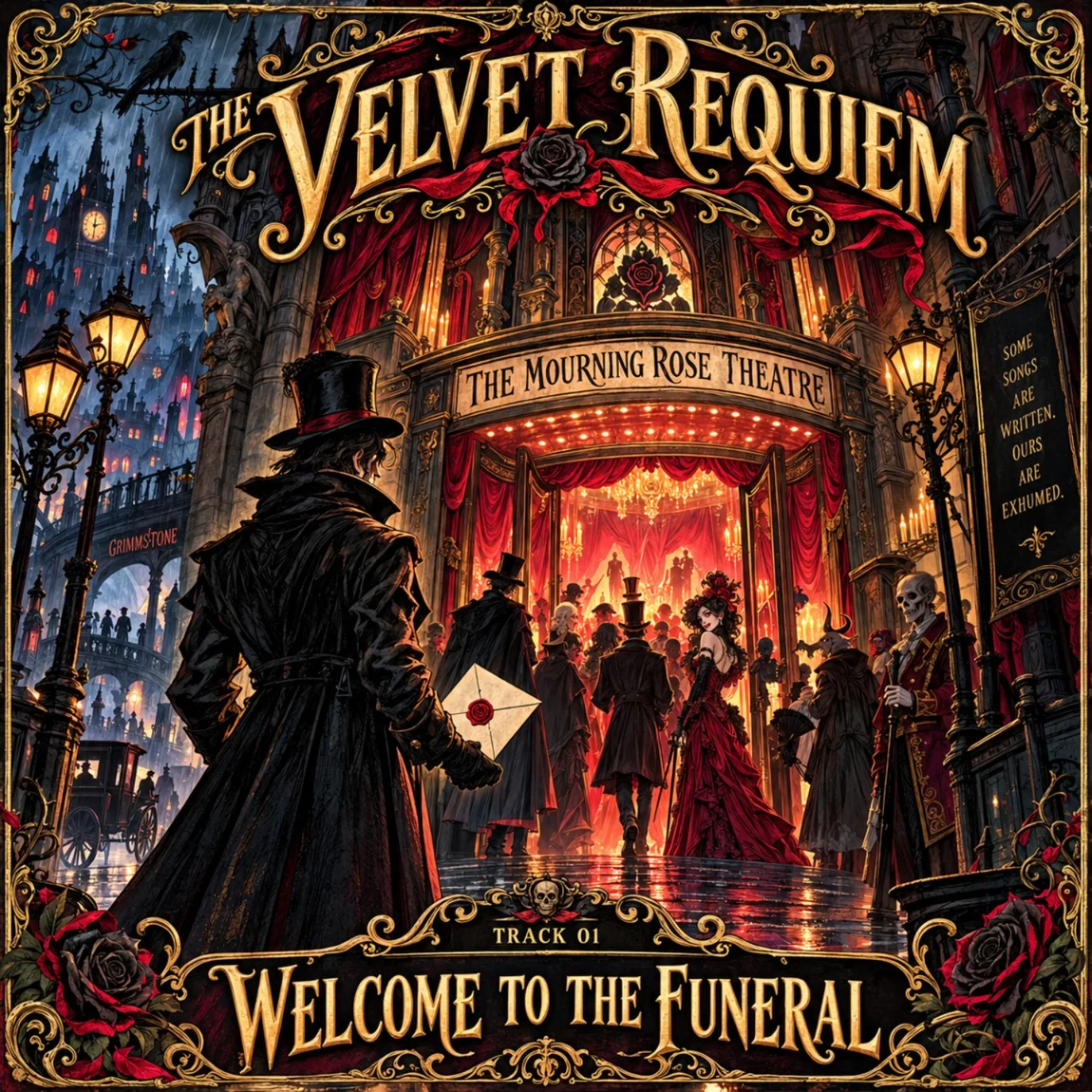
A visitor arrives carrying a black invitation and finds a theatre expecting them. The usher knows their name; the seats seem empty until the performance begins. Vivienne welcomes the stranger with a smile that is both hospitality and warning.
The Grimmstone Story Behind the Song
A radio recording of the song reportedly circulated before the band formed. Tickets from different eras bear the same seat number. The visitor may be the guest of honor, although the program refuses to explain what is being mourned.
02Velvet and VenomThe Temptation · Velvet Quarter • A candlelit salon+
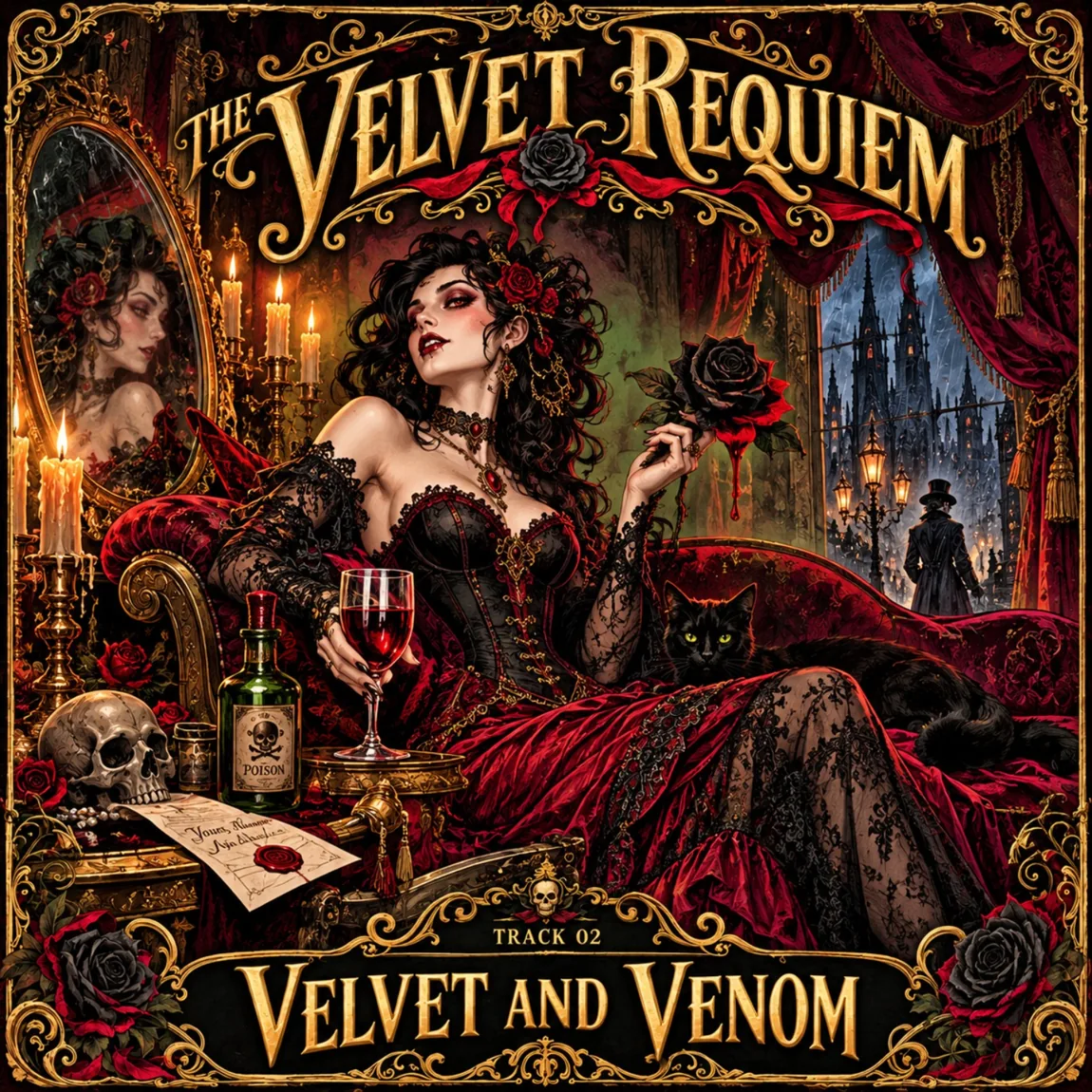
Vivienne sings of a night of dangerous glamour, where every flirtation can become a bargain. The lover thinks they control the evening, but the cost may be a secret, a memory, or a promise they never meant to make.
The Grimmstone Story Behind the Song
A guest once left with a receipt stamped Paid in Full and no memory of the evening. Some say the price was a reflection; others insist the real price was remembering what they had wanted.
03The Ironworks WaltzThe Machine · Ironworks • The factory beneath the factory+
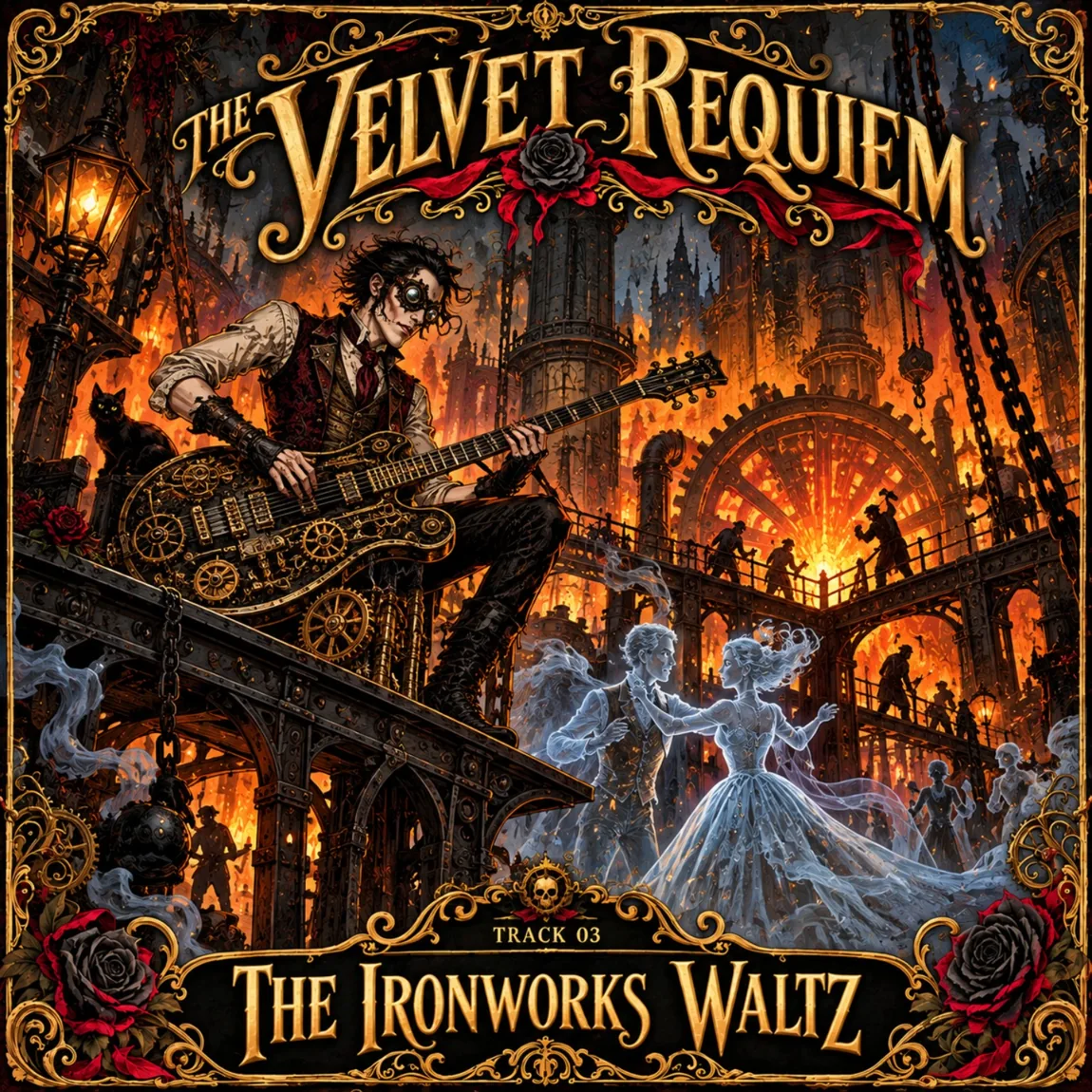
Mordecai turns hammers, gears, and shift bells into a ferocious three-beat dance. Ghostly workers circle a machine that promises prosperity while asking people to give more than they can spare.
The Grimmstone Story Behind the Song
Workers in several rival factories swear the song uses their own warning rhythm. A child once recognized a parent’s footsteps in the second note of The Widowmaker.
04Everybody’s Somebody’s GhostThe Memory · Mourning Square • Streets of remembrance+
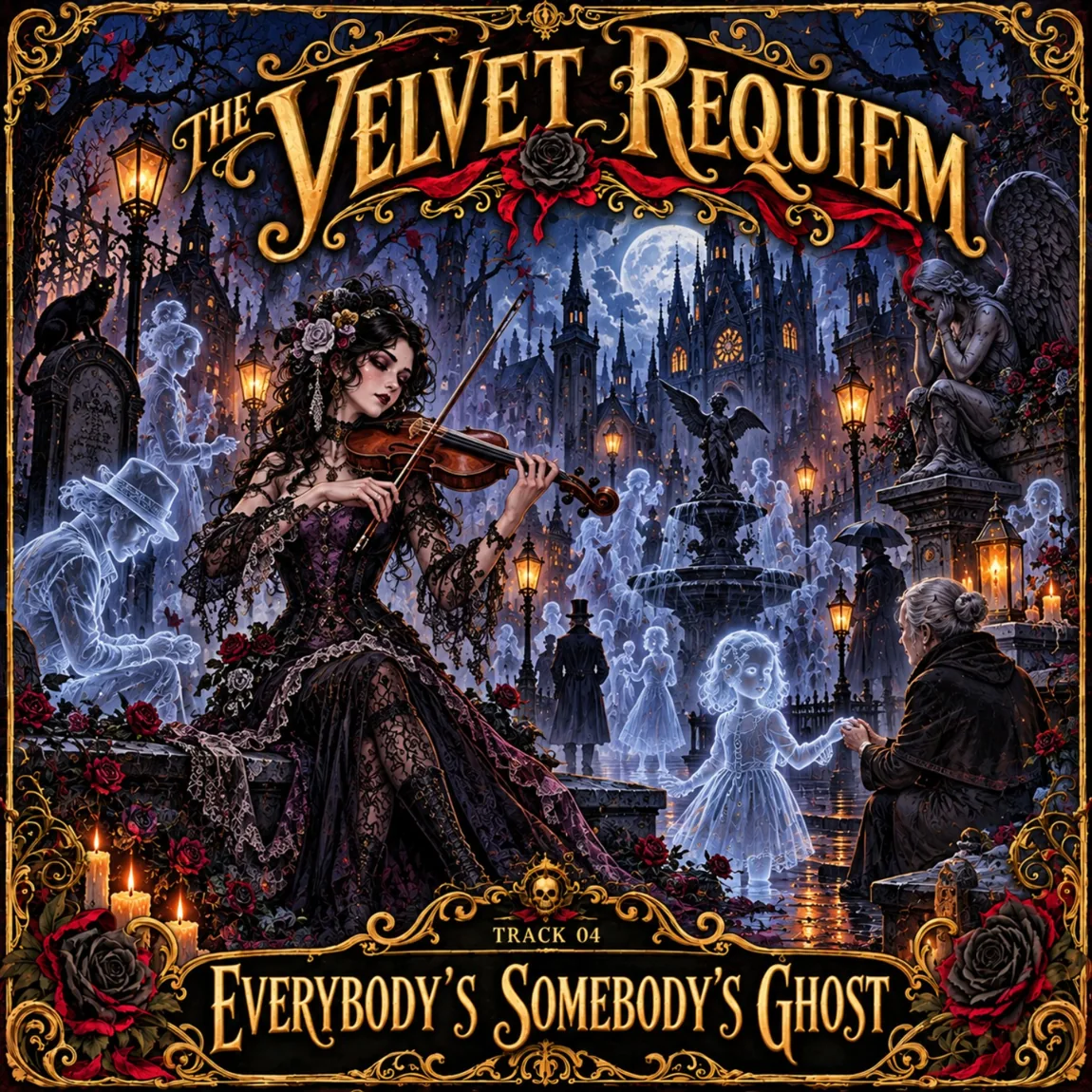
Ophelia’s violin follows the small absences that remain after someone is gone: an unworn coat, an empty chair, a letter never opened. The song reminds the visitor that the living haunt one another, too.
The Grimmstone Story Behind the Song
Some listeners hear the name of a lost person between violin phrases. A funeral guest claimed the dead rose briefly to thank the mourners; the musicians neither confirm nor deny it.
05Black Briar MillionairesThe Excess · Black Briar • Private masquerades+
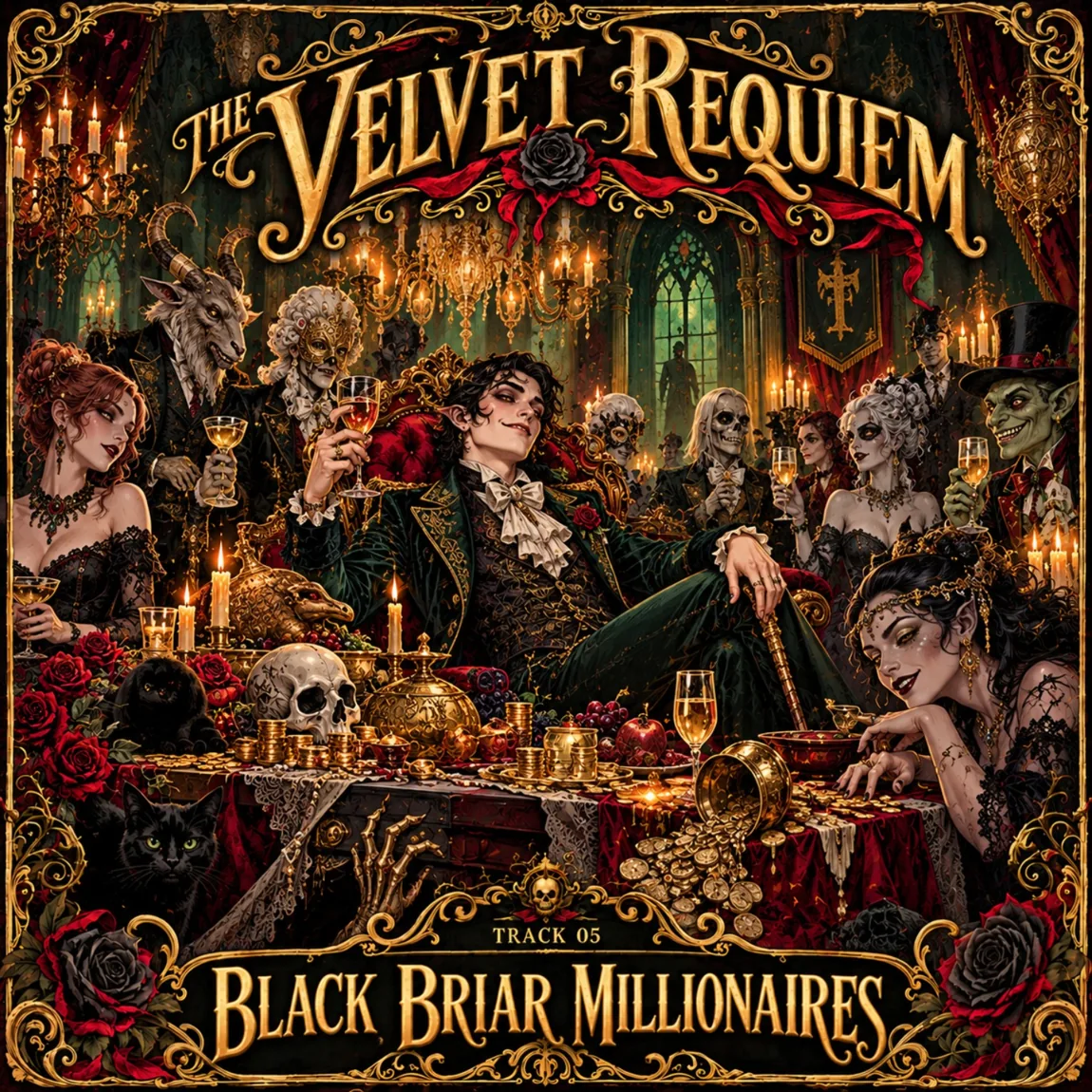
Felix offers a wickedly elegant tour of fortunes built on favors, secrets, and purchased respectability. His bass line struts through a banquet where everyone has a price and nobody wishes to discuss the bill.
The Grimmstone Story Behind the Song
Several powerful families tried to suppress the song, each certain that it describes their own scandals. Felix calls the portraits fictional, but he can name the staircases in them.
06Sixth Circle Saturday NightThe Celebration · Sixth Circle • An overcrowded neighborhood bar+
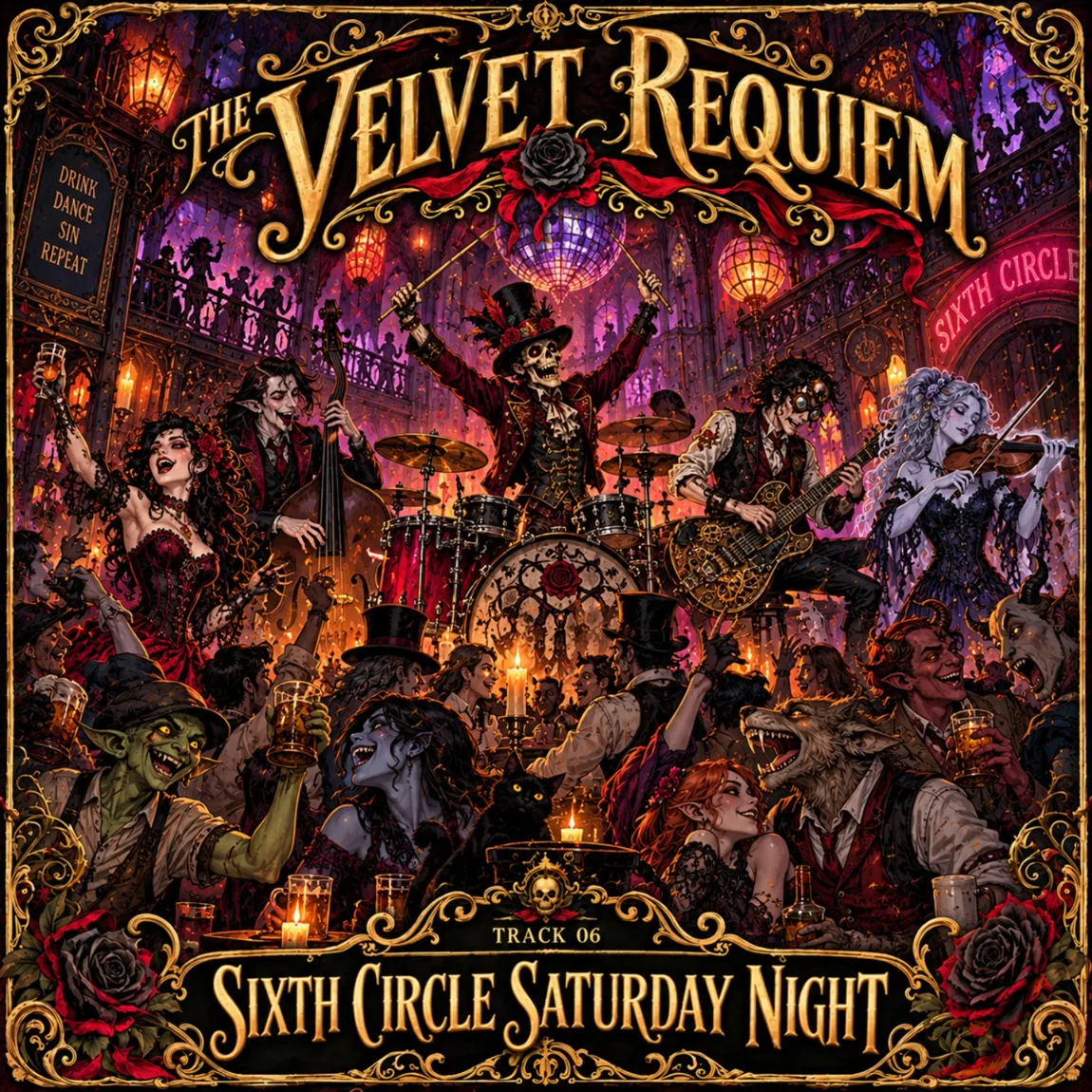
Rattle Jack leads a riotous night of dancing, arguments, bad decisions, and unexpected companionship. Under the jokes is the story of a revenant who found people willing to make room for him.
The Grimmstone Story Behind the Song
The legendary Saturday night has been dated to multiple decades. A handwritten invitation sometimes arrives thirty years late, bearing the warning: You promised you’d remember.
07The City Never Sleeps (It Just Pretends)The City · Across Grimmstone • Every district+
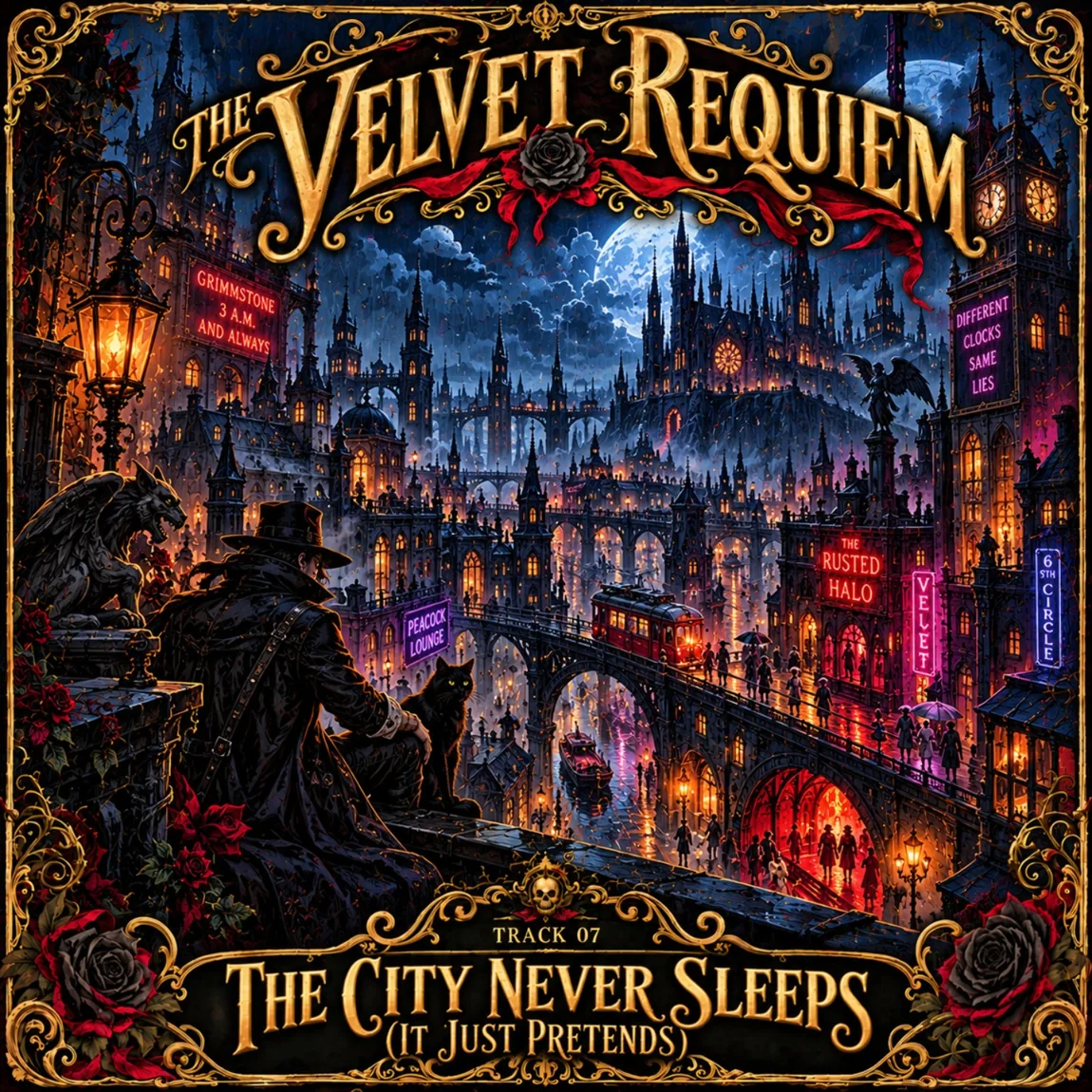
The whole band steps back to let the city sing. Rain, contradictory clocks, exhausted workers, wandering monsters, and strangers helping strangers become a declaration that being lost is not the same as being alone.
The Grimmstone Story Behind the Song
Silas Grey aired a version eleven seconds longer than the released recording. Each listener remembers a different missing verse, often naming a home they thought they had forgotten.
08A Kiss Before the CoffinThe Love · A candlelit chapel • Somewhere between farewell and forever+
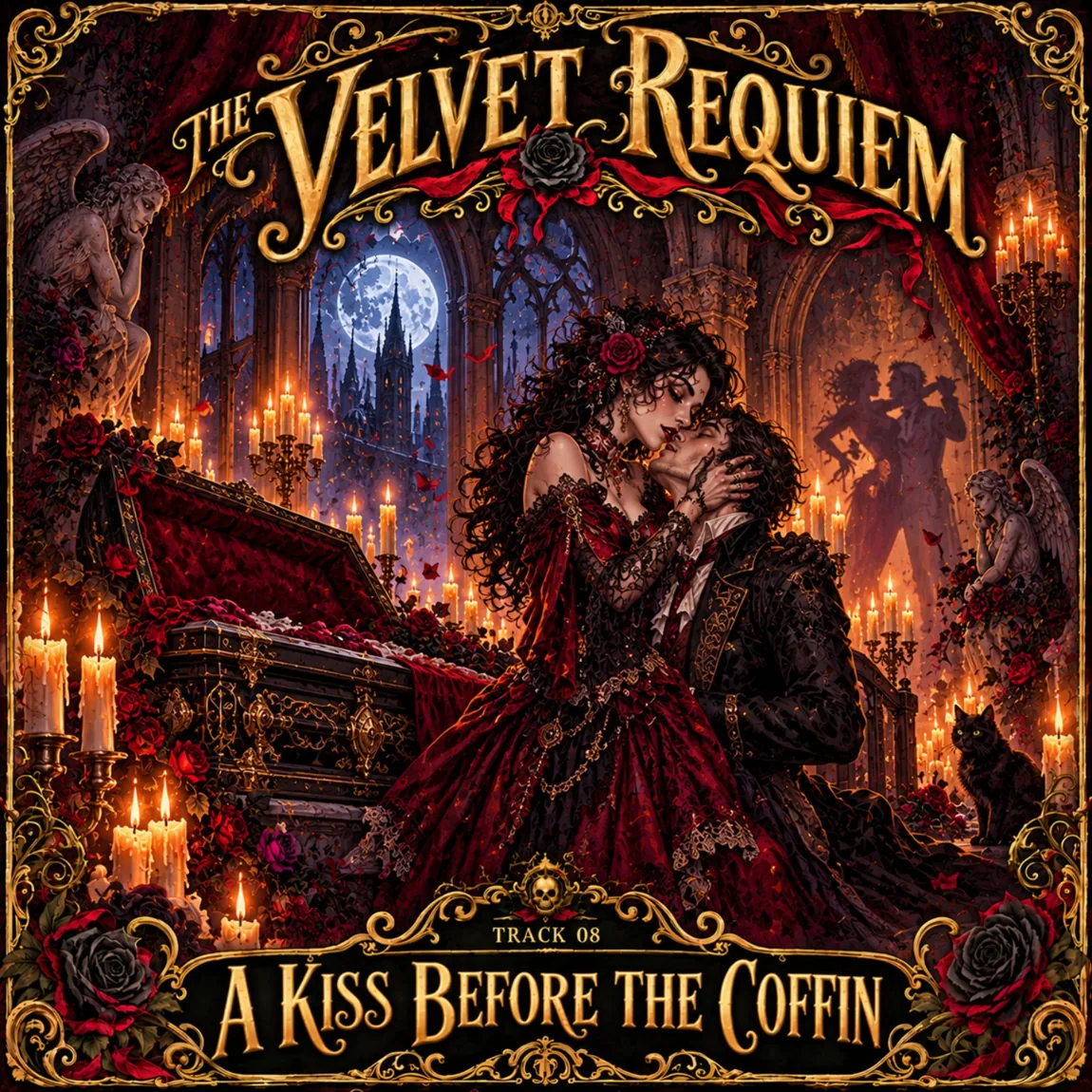
Vivienne and Mordecai trade intimate verses about two lovers who choose one honest night over a promise they cannot keep. Their duet asks whether love needs eternity to matter.
The Grimmstone Story Behind the Song
Witnesses describe two dancers frozen beneath stopped clocks. When the music ended, only one remained. Recordings sometimes contain a third footstep belonging to neither performer.
09Five Twenty-FiveThe Revelation · The Mourning Rose • A room that should not exist+
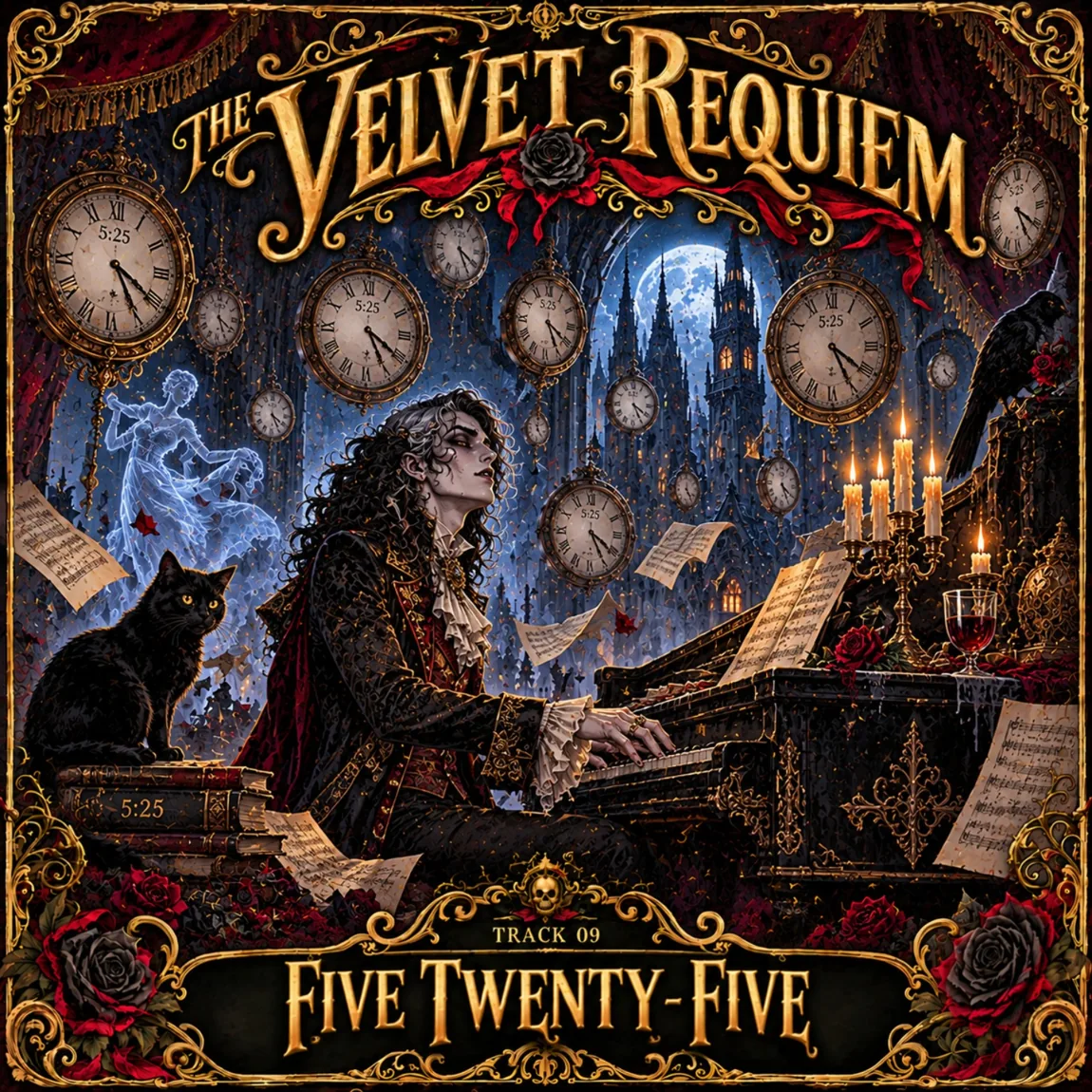
Professor Hollow confronts a musical phrase that seems bound to the city’s uncertain edge of morning. The song moves uneasily between rhythms as he approaches a fifth measure he may have died trying to finish.
The Grimmstone Story Behind the Song
A second piano can be heard playing notes before Hollow strikes them, though no second instrument was present. His final words—“I remember now”—have prompted more questions than answers.
10A Beautiful DepartureThe Beginning · The Mourning Rose Theatre • The open doors+
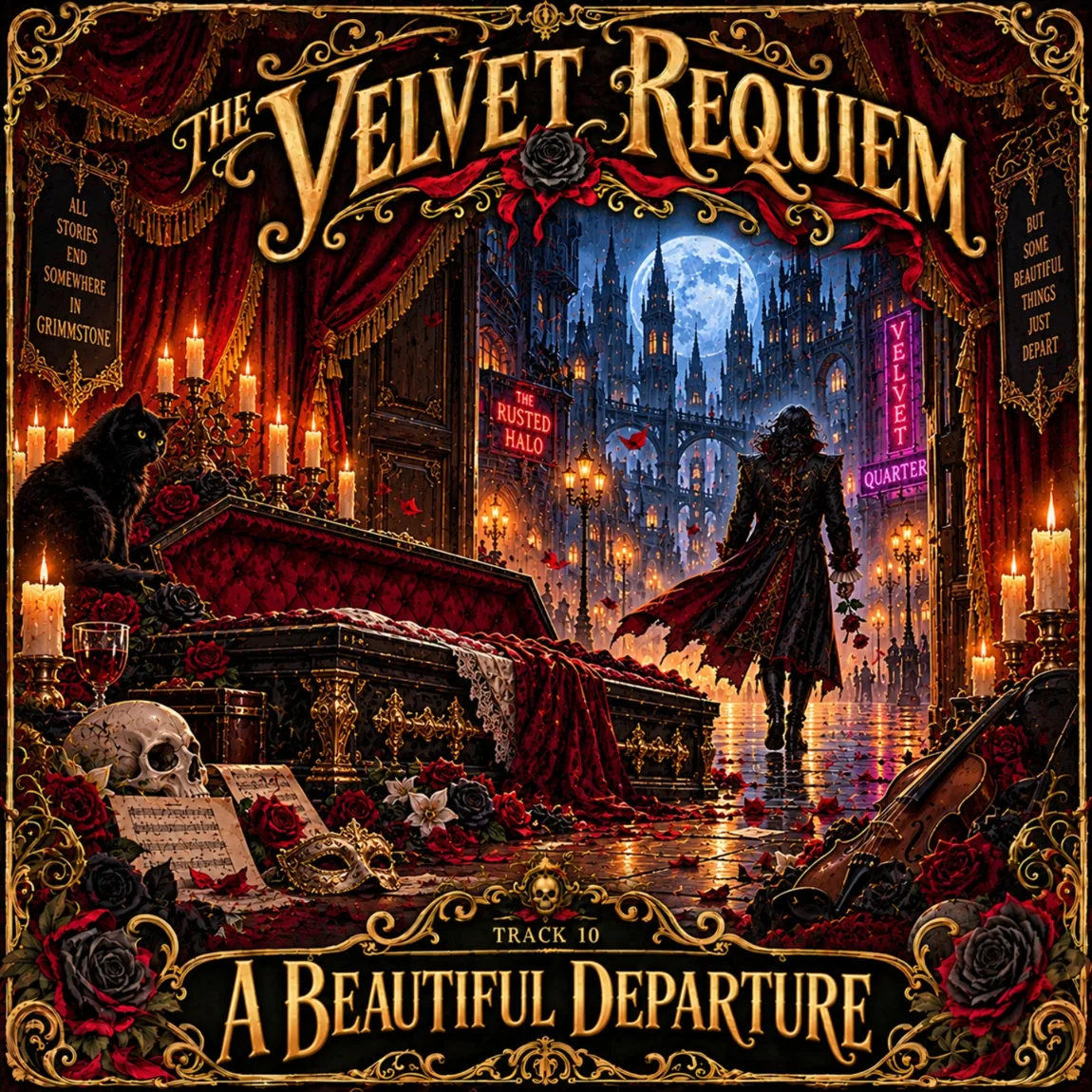
The visitor finds an empty coffin and an invitation bearing their own name. Instead of an ending, the band offers a chance to leave old burdens behind without denying the past. The last notes follow the visitor out into Grimmstone’s rain.
The Grimmstone Story Behind the Song
At the first performance, every audience member remembered their own name on the funeral card. Professor Hollow completed his unfinished phrase and said: “I had mistaken an ending for the end.”
What the Requiem Leaves Behind
The band’s music is not a cure for loss. It does not undo the damage of an unfair bargain, return every missing person, or make the night safe. What it can do is gather the city’s strange residents beneath one roof and remind them that a story is not over merely because it has changed shape.
Perhaps that is why their concerts attract such a varied audience: laborers, wealthy patrons, investigators, ghosts, lovers, and people who have never belonged anywhere long enough to call it home. For a few hours they all know the same chorus.
After the final performance of A Beautiful Departure, the theatre doors opened onto the rain. The coffin was empty. The visitor stepped outside. Nobody knows whether they ever left Grimmstone. The band prefers to think they found somewhere worth staying.
“Some songs are written. Ours are exhumed.”
For the Curious Visitor
If you hear The Velvet Requiem on Grimmstone Radio 103.3 GM, listen carefully. Some recordings include a note that does not belong to the arrangement. If you find a black envelope beneath your door, you may wish to check the address before opening it. And should you ever visit the Mourning Rose Theatre, remember that the audience may be larger than it appears.
Welcome to the funeral. We hope you enjoy your stay.
← Back to Music & Artists